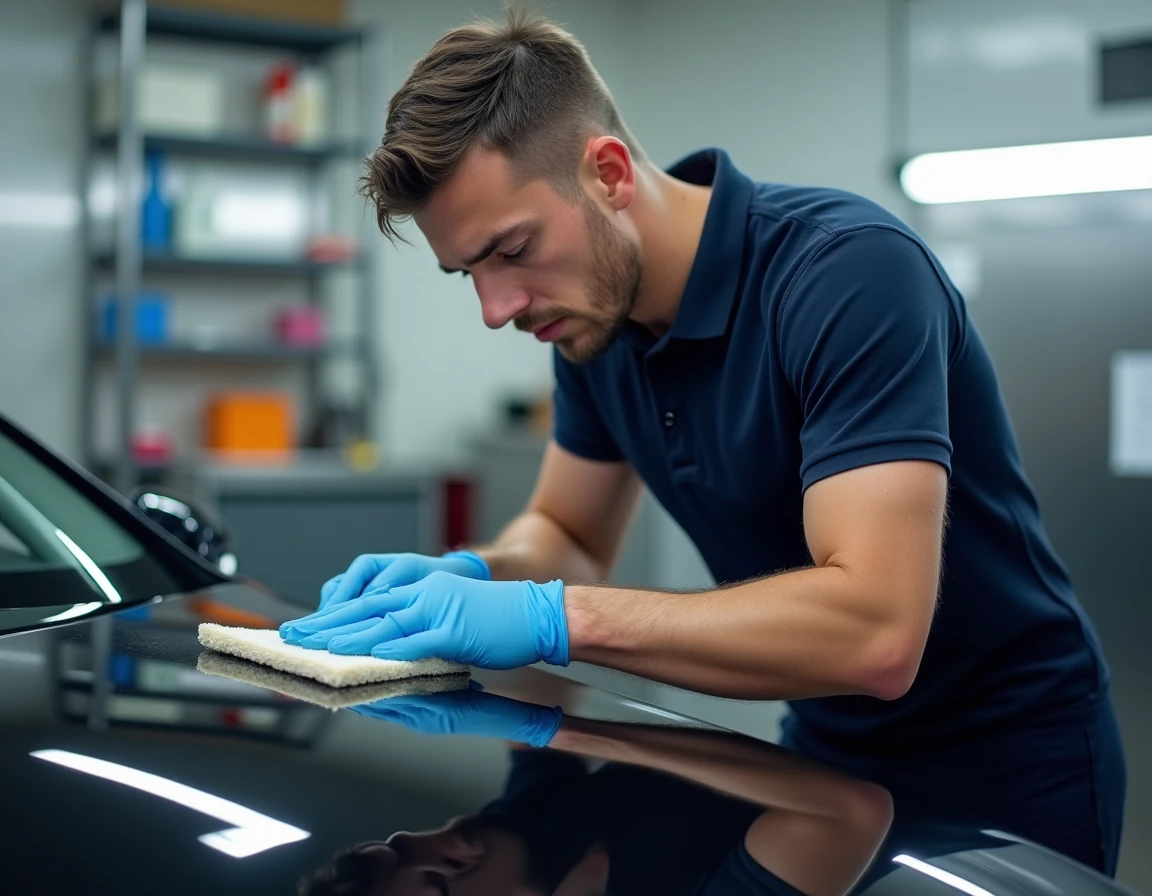
Professional automotive detailing refers to a set of technical processes aimed at cleaning, correcting, and protecting every surface of a vehicle, from the bodywork to the interior trim. These services go beyond simple washing: they involve rotary tools, products formulated for each type of material, and precise protocols that vary according to the condition of the paint.
Paint correction and polishing: what distinguishes a professional service from a standard wash
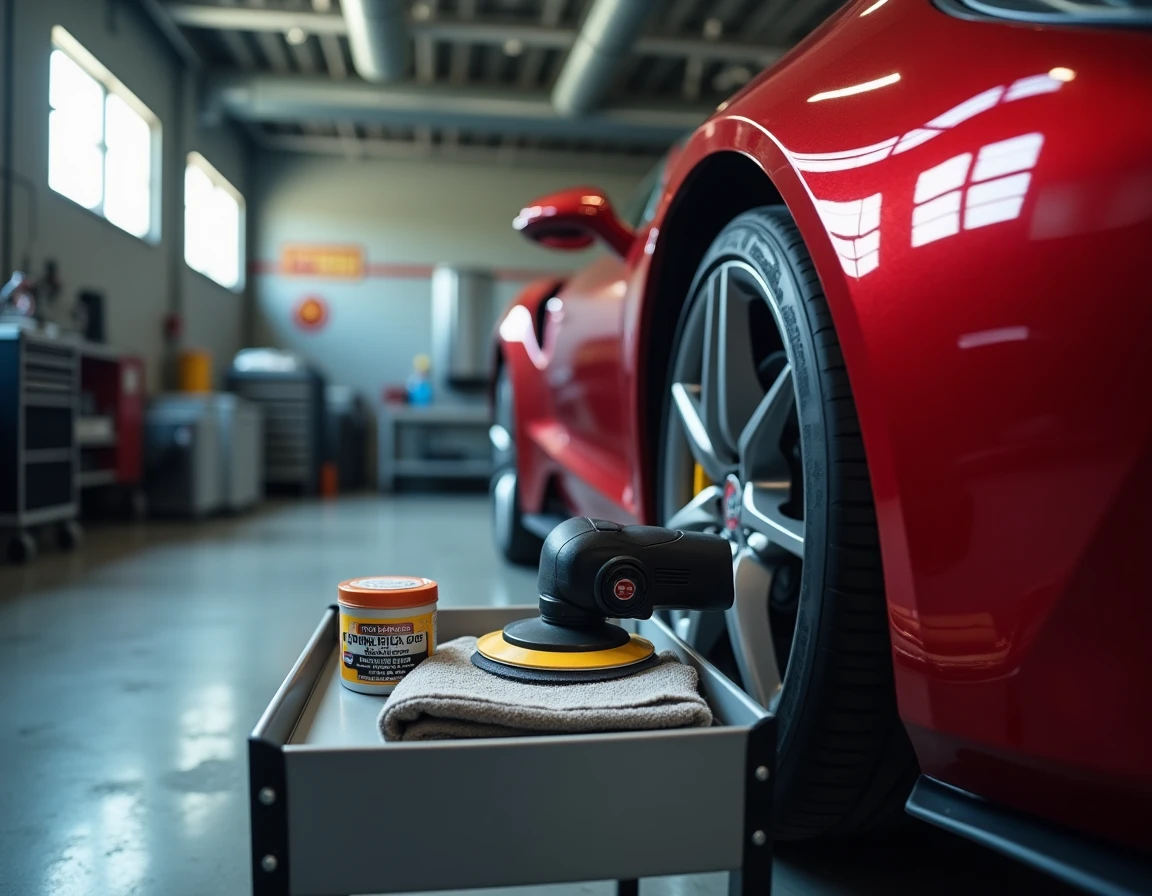
A visit to a roll wash station removes visible dirt. It does not address micro-scratches, swirls, or embedded oxidation marks in the clear coat. Mechanical polishing, performed with an orbital or rotary polisher, tackles these defects layer by layer by removing a tiny thickness of clear coat.
The difficulty lies in the dosage: a pad that is too abrasive or excessive working time on the same area can penetrate the clear coat and expose the colored base. Professionals measure the residual thickness of the clear coat before intervening, using a paint thickness gauge. This control prevents compromising the manufacturer’s original protection.
The result is judged under directed lighting. A detailing lamp reveals every residual imperfection that natural light conceals. This level of control explains why a professional polish takes several hours on a single vehicle, while an automatic wash lasts only a few minutes.
Specialized structures like La Belle Auto offer this type of service, with a protocol tailored to the actual condition of the bodywork rather than a standard service applied to all vehicles.
Ceramic protection and PPF: comparative durability of body treatments
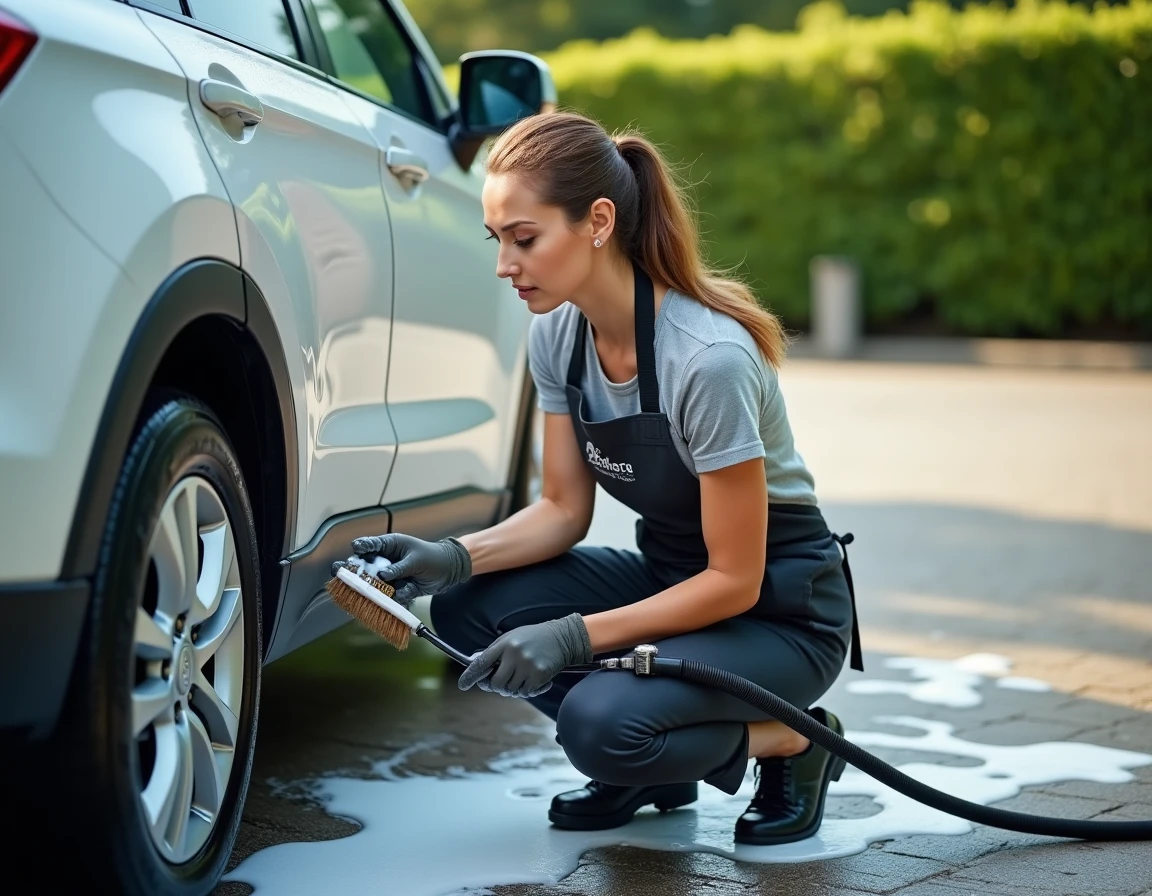
After correction, the exposed paint needs a barrier against daily aggressions: UV rays, bird droppings, tree resin, tar splashes. Two main families of protection dominate the professional market.
Ceramic treatment
A ceramic coating is a liquid product based on silicon dioxide (SiO2) that, once applied and cured, forms a hydrophobic layer on the clear coat. Water beads up and carries dirt away, reducing the frequency of washing.
The application requires a perfectly decontaminated and corrected surface. If defects remain, the ceramic will freeze them under its protective layer. Preparation is as important as the product itself.
Paint Protection Film (PPF)
Paint protection film (PPF) is a transparent thermoplastic membrane adhered to areas exposed to impacts: hood, bumper, side skirts, mirrors. Unlike ceramic, PPF physically absorbs gravel impacts and light scratches thanks to its thermal self-healing capability on recent models.
The combination of both approaches covers complementary needs: PPF protects against mechanical impacts, while ceramic facilitates regular maintenance and enhances shine. Applying one without the other remains consistent depending on the budget and use of the vehicle.
Interior renovation: cabin, leather, and technical plastics
The invisible part of detailing concerns the cabin. Professional interior cleaning is distinguished by the differentiated treatment of each material.
- Leather requires a neutral pH cleaner followed by a nourishing balm that preserves the flexibility of the fiber. An unsuitable product dries out the leather and causes cracks within months.
- Technical plastics (dashboard, door panels) are cleaned with a mild degreaser and then receive a matte or satin dressing depending on the desired finish, without a greasy effect that attracts dust.
- Carpets and fabrics undergo hot water extraction (injector-extractor) that deeply removes dirt, far beyond what a household vacuum can achieve.
- Interior windows, often neglected, accumulate a greasy film from plastic emissions. A silicone-free glass cleaner removes this veil and restores nighttime visibility.
A properly renovated cabin contributes to the perceived value of the vehicle. Used car sales platforms have observed for several years that a complete aesthetic refurbishment reduces the selling time and limits the downward negotiation margin.
Eco-responsible detailing products: what the regulations change
The composition of products used in detailing is receiving increasing attention. In recent years, several local authorities have been more strictly regulating wastewater discharges from car washing. This regulatory pressure is pushing manufacturers to develop biodegradable ranges, free from petroleum solvents and aggressive volatile organic compounds (VOCs).
For consumers, this evolution translates into a wider choice of services using products with low environmental impact. European brands specializing in eco-labeled detailing are multiplying, and some professional networks make this a criterion of their quality charter.
The ecological gain does not come at the expense of performance. Recent water-based formulations achieve degreasing and protection results comparable to solvent-based products, provided that the recommended application times and dosages are respected.
Labels and certification: guidelines for choosing an automotive preparer
The detailing market in France is gradually structuring itself. Organizations like the Fédération Française du Detailing (FFD) or the International Detailing Association (IDA) have been developing training and certification references for professionals for several years.
These labels do not guarantee a result by themselves, but they indicate a foundation of verified skills and adherence to quality and professional ethics charters. Before entrusting a vehicle, checking the preparer’s training and the products they use remains the most reliable reflex.
A transparent provider communicates about their protocols, product brands, and estimated intervention times. The complete absence of information on these three points should be enough to steer the choice towards another professional.