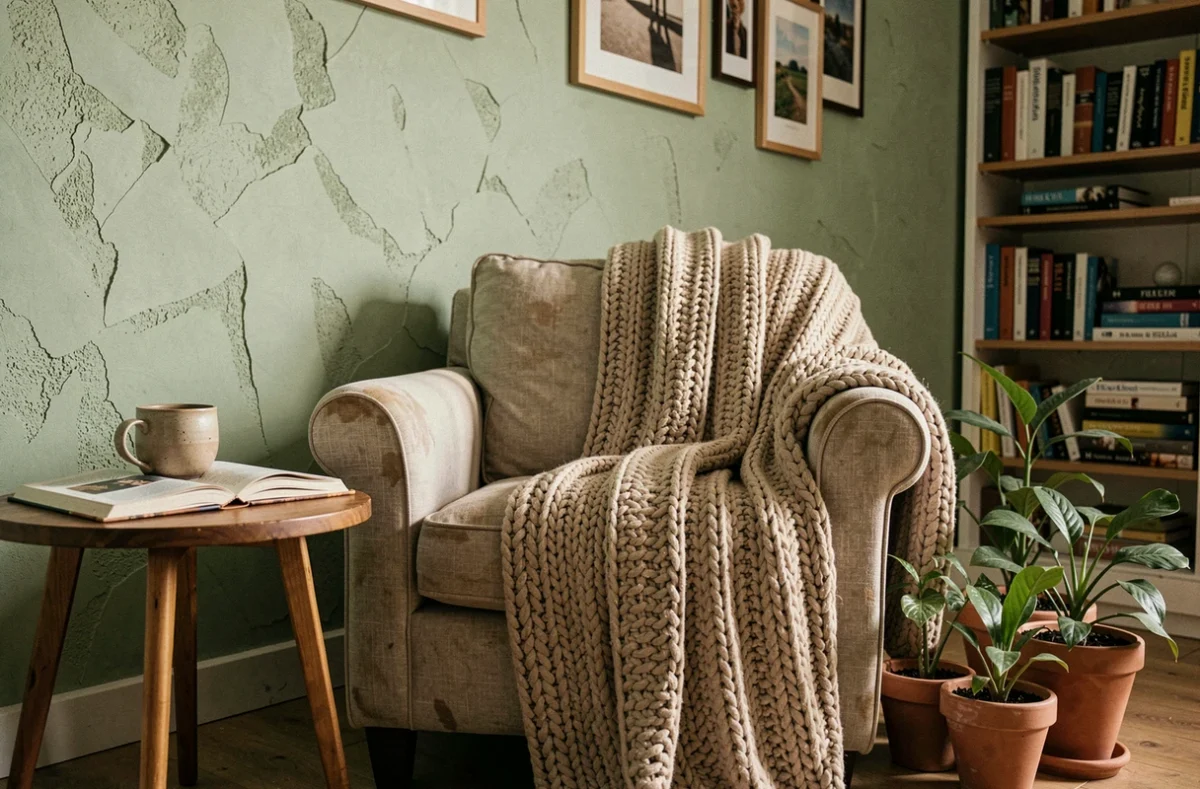
An interior where one feels enveloped is not just about the choice of a throw or a scented candle. The feeling of a cocoon relies on often overlooked parameters: the way sound circulates in a room, the perceived temperature near a poorly insulated window, or the quality of the air we breathe while sleeping. Transforming your interior into a true cocoon means working on these invisible dimensions as much as on the color palette.
Indoor acoustics: the comfort you hear without thinking
Have you ever noticed that an empty room resonates, while a furnished living room seems quieter? This phenomenon has a name: reverberation. The harder and more bare the surfaces are (tiles, smooth walls, large windows), the more sound bounces and amplifies every noise.
To create a cocooning atmosphere, it is necessary to absorb these sound reflections. A thick rug placed on a hard floor significantly reduces reverberation in the room. Heavy curtains in front of the windows serve the same purpose while filtering the light.
A well-stocked bookshelf placed against a party wall acts as a natural acoustic panel. Books, due to their irregular density, break sound waves much better than a flat surface. This is a concrete example where furniture serves a dual function, decorative and acoustic.
External noises (street, neighbors) also deserve attention. Before investing in decoration, check the condition of your window seals. A worn seal lets in as much noise as cold. The layout ideas found on the popshot.net home site allow you to combine aesthetic choices with everyday comfort.
Energy performance and warmth sensation in your interior
A cocoon, by definition, protects. If your home lets heat escape, no decorative arrangement will compensate for the discomfort of a cold wall or a constant draft.
As of January 1, 2025, homes rated G in the energy performance diagnosis can no longer be rented in France. Class F will follow in 2028, and class E in 2034. This regulation encourages owners and tenants to view insulation as a comfort element, not just an administrative obligation.
In practical terms, improving the insulation of a room changes the perceived temperature near the walls. A well-insulated wall remains warm to the touch, allowing you to place a sofa or bed against it without an unpleasant sensation. Conversely, a cold wall creates a barrier effect that makes you want to move away, reducing usable space.
Small gestures before major renovations
Not everyone can undertake a complete renovation. A few simple actions already improve the feeling of warmth:
- Applying adhesive seals on old windows to limit cold air infiltration, which can be done in a few minutes without special tools.
- Installing double-lined thermal curtains that create an insulating layer of air in front of the glazing and reduce heat loss.
- Placing a dense rug on a tiled floor or old parquet, as a cold floor cools the entire room by radiation.
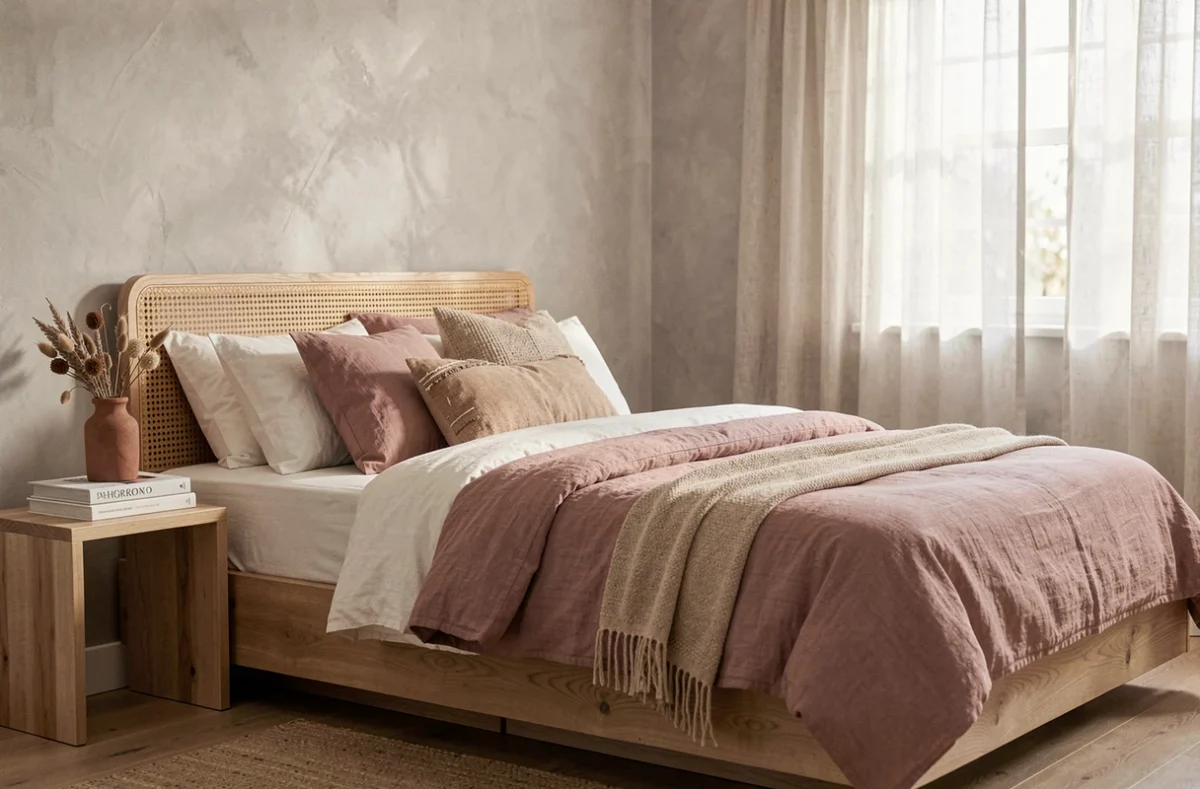
These gestures are as much about decoration as they are about energy performance. A thick linen thermal curtain, for example, adds a warm texture while serving a functional role.
Air quality and materials: the trap of an overly airtight cocoon
Accumulating textiles, candles, and cushions in a poorly ventilated space may seem cozy. The downside is less pleasant: a very textile and poorly aired interior concentrates humidity and pollutants.
Cheap synthetic fabrics emit volatile organic compounds, especially when new. Scented candles release fine particles when burned. In a closed bedroom, these elements accumulate and disrupt sleep.
Choosing breathable materials
Favor natural fibers for your home textiles: linen, cotton, wool. These materials naturally regulate ambient humidity by absorbing excess and releasing it when the air dries out. A wool throw, for example, keeps you warm without causing excessive sweating.
For furniture, solid wood remains a safe bet. Unlike particle boards covered with melamine, solid wood does not emit formaldehyde and ages without losing its qualities.
Daily ventilation remains the simplest measure. Opening the windows for ten minutes is enough to renew the air in a room without cooling the walls. Do this preferably in the morning, when the heating has not yet reached its cruising temperature.
Colors and lighting: composing a coherent cocooning palette
Colors directly influence the atmosphere of a room. For a cocoon effect, warm and muted shades work better than pure whites or bright colors.
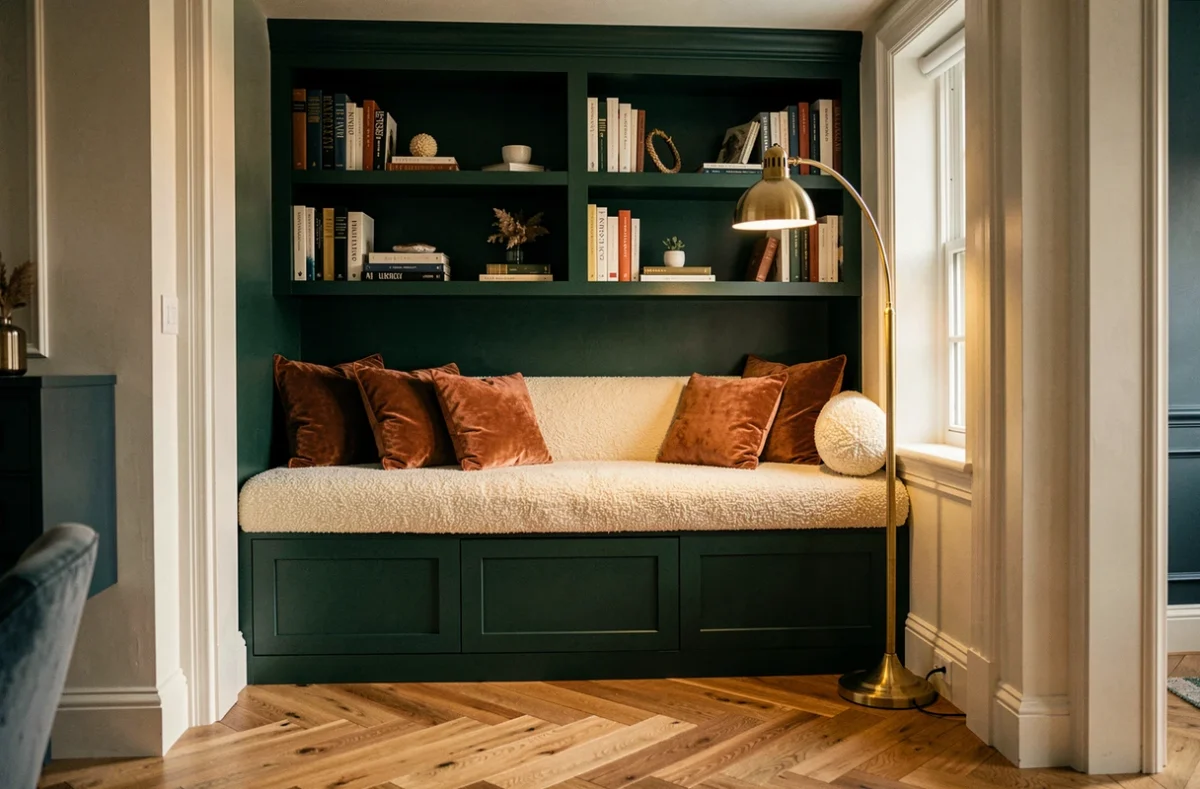
Think of earthy tones: terracotta, rosy beige, sage green, clay brown. These softening colors reduce visual contrasts and rest the eyes. A single wall painted in a strong tone is enough to anchor the ambiance of a room without darkening the whole space.
Lighting completes the palette. A room lit only by a central ceiling fixture appears cold and flat, regardless of the wall colors. Multiply low light sources: table lamp, reading light, warm light garland. The goal is to create soft shadow areas that add depth and invite you to settle in.
Avoid bulbs above 3,000 kelvins in rest areas. The lower the color temperature, the more the light leans towards yellow-orange, which promotes relaxation. The so-called “warm white” bulbs fall within this range.
Transforming an interior into a cocoon requires going beyond the simple accumulation of decorative objects. True comfort arises from the convergence of insulation, acoustics, air quality, and visual ambiance. A rug can both warm a floor, muffle footstep noise, and add a touch of color. It is this versatility of choices, rather than the multiplication of purchases, that makes the difference between a space that is simply pretty and a place where one feels protected.