A fulfilling family life does not rely on a single model. It is built at the intersection of concrete constraints: screen management, distribution of mental load, quality of shared time. Several recent studies in France shed light on these topics from a less conventional angle than the usual lists of good resolutions.
Parental technoférence: when adults’ screens weaken family bonds
The public debate on screens almost always targets children. Age and duration recommendations are well-known. What is less understood is the impact of parental screens on the quality of daily interactions.
The term technoférence refers to the interruption of a parent-child exchange by a digital device. Checking a message during a meal or conversation disrupts the thread of shared attention. Field reports vary on the extent of the phenomenon, but the direction is clear: a parent’s physical presence does not guarantee their actual availability.
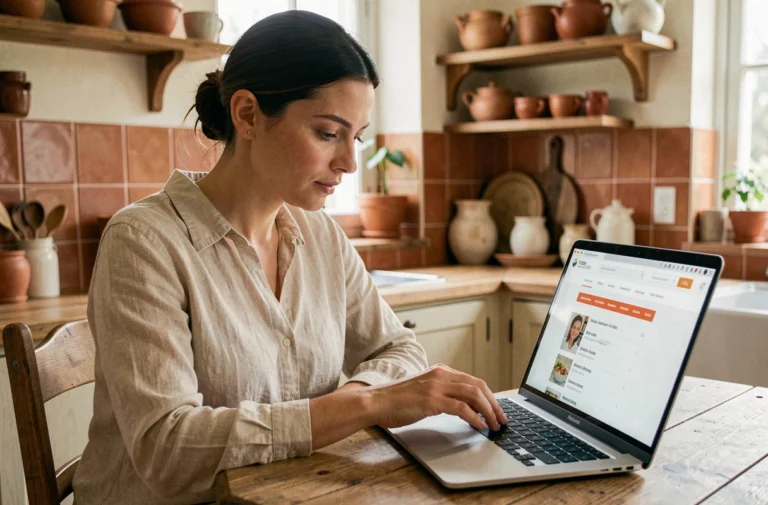
A report from the General Inspectorate of Education, Sports and Research (IGÉSR), published in June 2025, highlights a rarely mentioned factor. Digital tools for the school-family relationship (ENT, school messaging, parent groups) multiply requests and transfer part of the coordination work to parents. The result: additional stress, not just screen time. Several resources compiled on the family page of Happy Maman address this interplay between parenting and digital pressure in everyday life.
An operational piece of advice would be to establish family time slots without consulting the ENT or messaging groups, rather than focusing solely on children’s screen time.
Screens and children: French recommendations shift from a time threshold to a qualitative approach
Limiting screen time to one hour per day for children under six: this type of quantified guideline has long dominated the discourse. Recent French benchmarks are taking a different direction.
According to data from the Enabée study by Santé publique France (September 2025) and the summary from the High Council of Public Health, the context of use matters more than the raw duration. The content viewed, adult supervision, impact on sleep, and physical activity become the central evaluation criteria.
In practical terms, this changes the family conversation around digital media. Watching a nature documentary with a parent does not have the same effect as solitary scrolling on a tablet. The framework is no longer limited to “how many minutes,” but rather “under what conditions.”
- Check the nature of the content before offering it, not just the viewing duration.
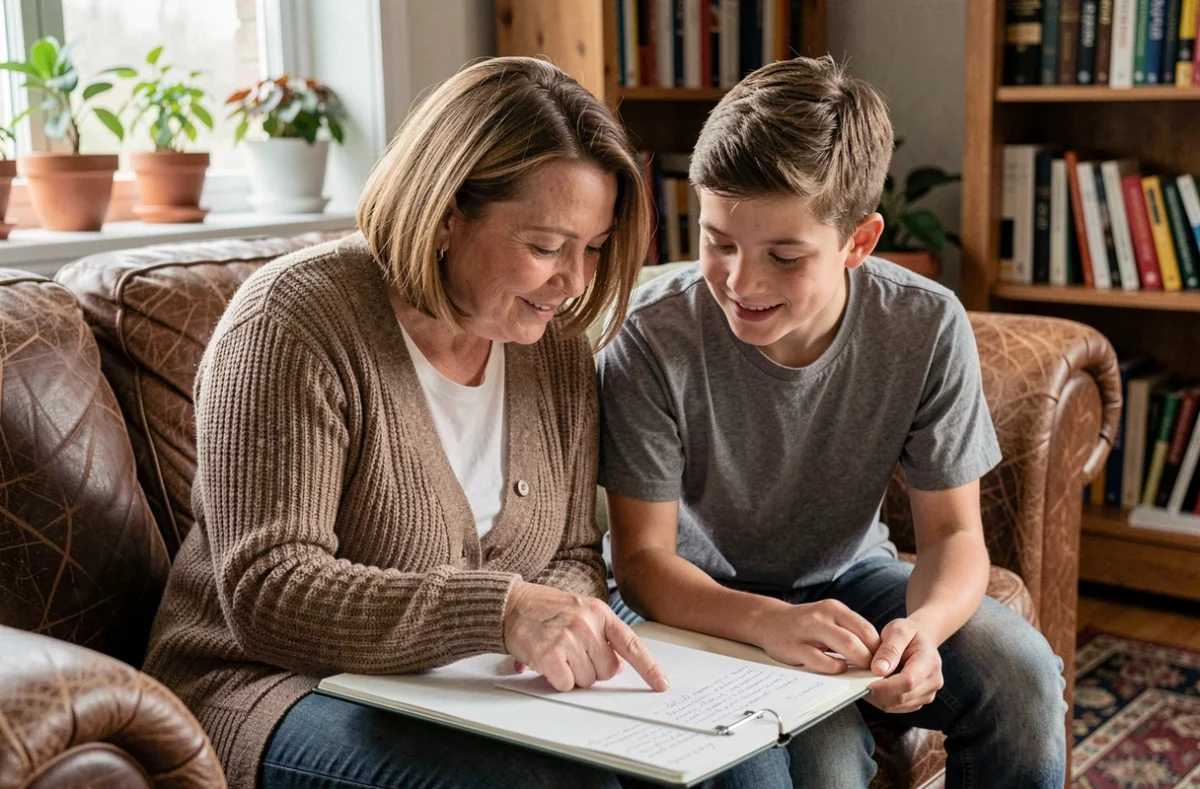
- Watch a program with the child and discuss it afterward to transform passive time into exchange.
- Observe concrete signals: sleep quality, mood after screen time, desire to play outside or not.
This analytical framework requires more attention than a simple timer, but it better reflects the reality of family usage.
Domestic mental load: an imbalance that weighs on family life
The mental load remains a structuring issue for a fulfilling family life on a daily basis. It refers to the invisible work of planning, anticipating, and coordinating domestic and parental tasks.
This work still predominantly falls on mothers, even in households where physical tasks are better distributed. Remembering to make a medical appointment, checking that there are enough diapers, anticipating the next day’s meal: this cognitive layer does not appear on any shared schedule.
The available data does not suggest a rapid evolution of this imbalance. However, several concrete avenues exist to make it visible and redistribute it.
- Write down all the invisible tasks for a typical week, without omitting anything (shopping, administrative tasks, school logistics, managing appointments).
- Assign each task to a single responsible person rather than operating on a “help on demand” basis, which keeps the coordination load on one person.
- Reassess the distribution at regular intervals, as needs change with the children’s ages.

Parental presence leave, an unknown lever
When a child faces a serious illness or disability, parental presence leave allows an employee to take time off to care for them. This provision exists in French law, but awareness remains limited among affected families. Information circulates poorly, and administrative procedures hinder its use.
Time spent with family: quality over quantity
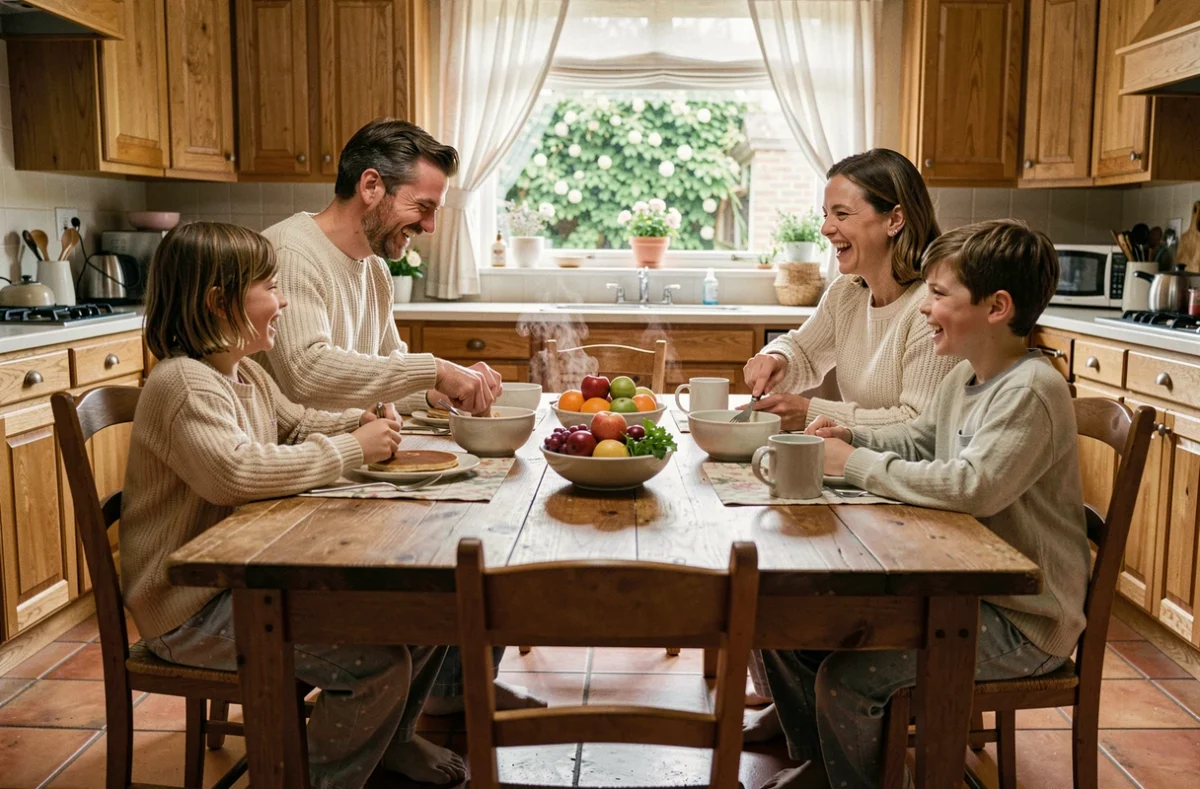
Spending a lot of time together is not enough to strengthen family bonds. It is the quality of shared attention that binds a family, not the number of hours. A twenty-minute meal without phones on the table fosters more connection than an entire afternoon where everyone is absorbed in their own screen.
The value of “free time” (without educational goals, without planned activities) is often underestimated. Playing a board game, cooking together, walking without a specific destination: these unstructured moments create a space where conversation flows more freely.
The pressure to organize enriching activities at every free moment can produce the opposite of the desired effect. Accepting shared boredom is part of a healthy family life. When a child says “I’m bored” in the presence of their parents, they sometimes express a relational availability that can be seized.
A fulfilling family life is played out in continuous adjustments, not in the application of a fixed program. Reducing technoférence, evaluating screens by their context rather than by a timer, naming the mental load to redistribute it: these three axes do not cover everything, but they touch on points that most conventional parenting advice overlooks.