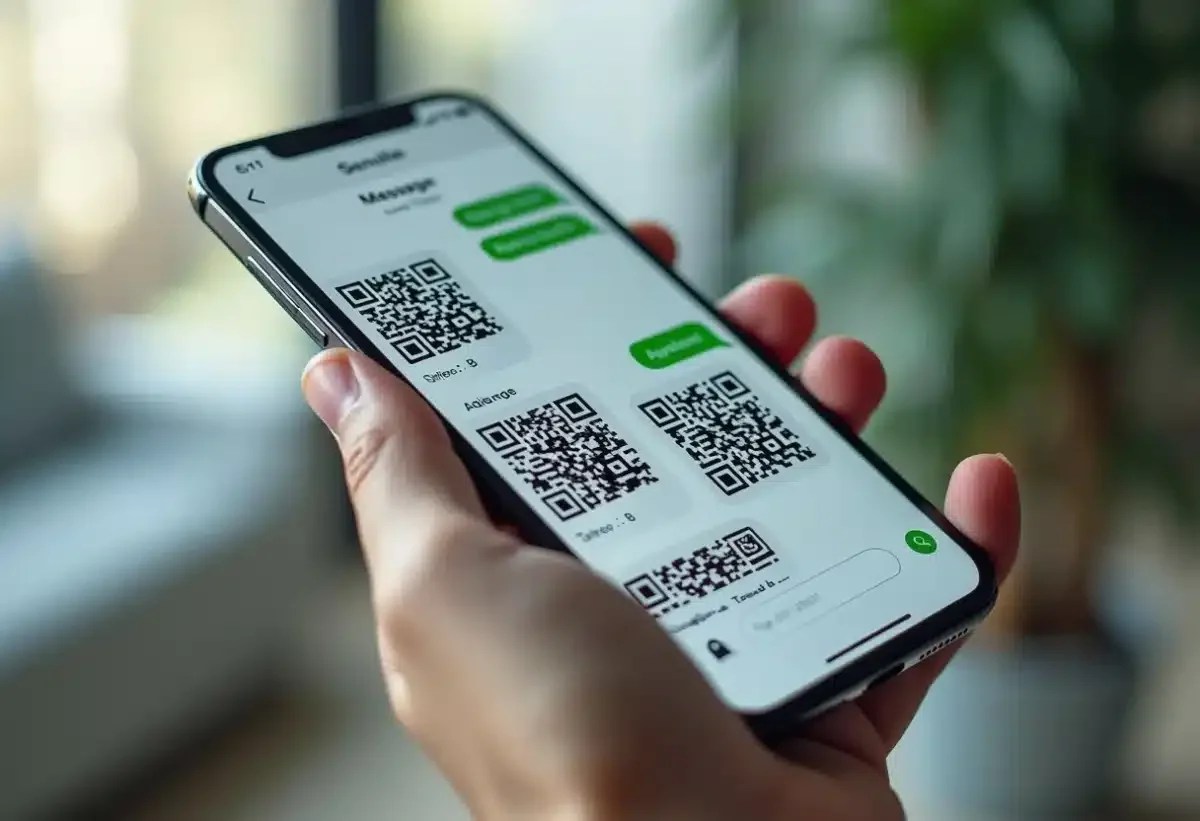
QR codes are no longer limited to payments or restaurant menus. They are now invading instant messaging applications, transforming our digital exchanges. By simply scanning a QR code, it is possible to share contacts, links, or even large files, all while avoiding tedious manual handling.
In a context of rapid and secure communication, these small black and white squares are establishing themselves as a practical and effective solution. They not only save time but also enhance the confidentiality of exchanges without going through third-party platforms.
The advantages of QR codes in instant messaging applications
The use of QR codes in instant messaging applications offers numerous advantages for both users and businesses. These benefits can be categorized into several aspects:
- Simplicity and speed: Scanning a QR code allows for instant information sharing without the need to manually enter data. This significantly improves the user experience.
- Security and privacy: By scanning a QR code, users can exchange information securely without having to go through third-party platforms, thereby reducing the risk of data leaks.
- Versatility: QR codes can be used for various functionalities, such as sharing contacts, opening links, sending predefined messages, or even initiating phone calls.
Concrete examples of use
Take the example of KakaoTalk QR. This application allows, through QR codes, to facilitate the addition of new contacts. Users can simply scan their friends’ QR codes to instantly add them to their contact list without having to manually search for their identifiers.
| Functionality | Use |
|---|---|
| Contact sharing | Scan a QR code to add a contact |
| Sending predefined messages | Scan a code to send a specific message |
| Redirecting to a website | Scan a code to open a link in the browser |
The QR Code, a computing device capable of encoding information, thus proves to be a multifunctional tool. Instant messaging, which allows the sending of multimedia messages, leverages this technology to enrich interactions between users.
A smartphone, capable of reading a QR code, then becomes the central instrument of this interaction. The messaging application is no longer just a communication tool but a multifunctional platform enhanced by the capabilities of QR codes.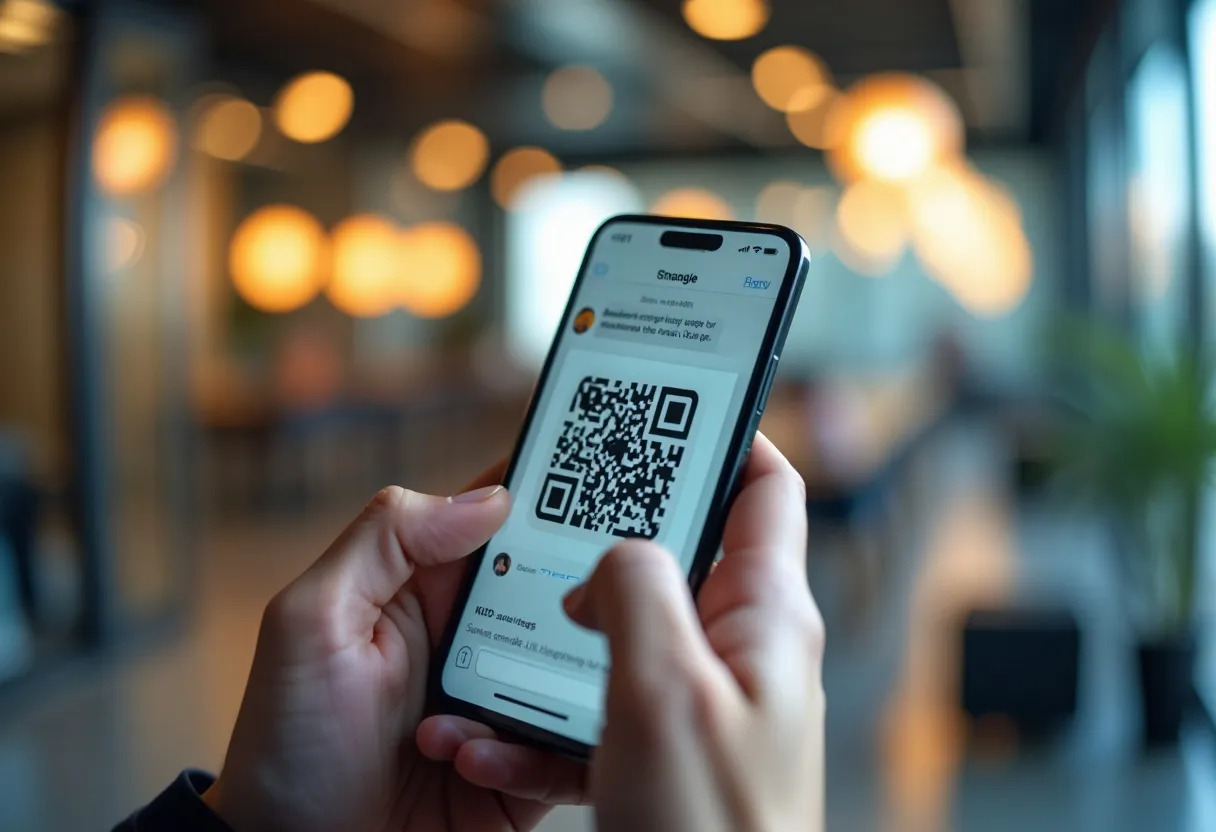
Examples of QR code usage in major messaging applications
The integration of QR codes in instant messaging applications is manifested through various features that facilitate and enrich interaction between users.
WhatsApp and the Click to Chat feature
WhatsApp has implemented the Click to Chat feature, which allows users to start a conversation by simply scanning a QR code. This method eliminates the need to save a phone number before being able to send a message. Businesses can use this feature to create predefined messages, thereby facilitating interactions with their customers.
Sharing contacts and websites
QR codes are also used to share contact information via digital business cards. By scanning a QR code on a business card, users can instantly add a person’s contact details to their phone directory. This method is not only quick but also ensures greater accuracy in the transfer of information.
QR codes can be linked to websites, allowing users to access specific pages directly with a single scan. This technique is commonly used in marketing campaigns to redirect users to special offers or product pages.
Google Maps and digital payments
Another innovative use of QR codes in messaging applications is their integration with Google Maps. Users can share precise locations by generating a QR code that, when scanned, directly opens the Google Maps app to the desired location.
QR codes also facilitate digital payments. By scanning a code, users can make secure transactions without having to manually enter payment information. This feature has become particularly popular in the e-commerce and financial services sectors.