Mastering color is essential for any artist or designer looking to captivate the eye with striking visuals. Yellow, with its variations ranging from bright lemon to warm gold, can be particularly tricky to achieve. Often associated with light and joy, it is a necessary color in the artist’s palette to infuse energy and vitality into works. However, achieving the exact shade of yellow desired requires an understanding of color science and mastery of a few practical tips. These tips can transform the way creators approach color mixing to compose the perfect yellow.
The secrets to achieving the perfect yellow: techniques and proportions
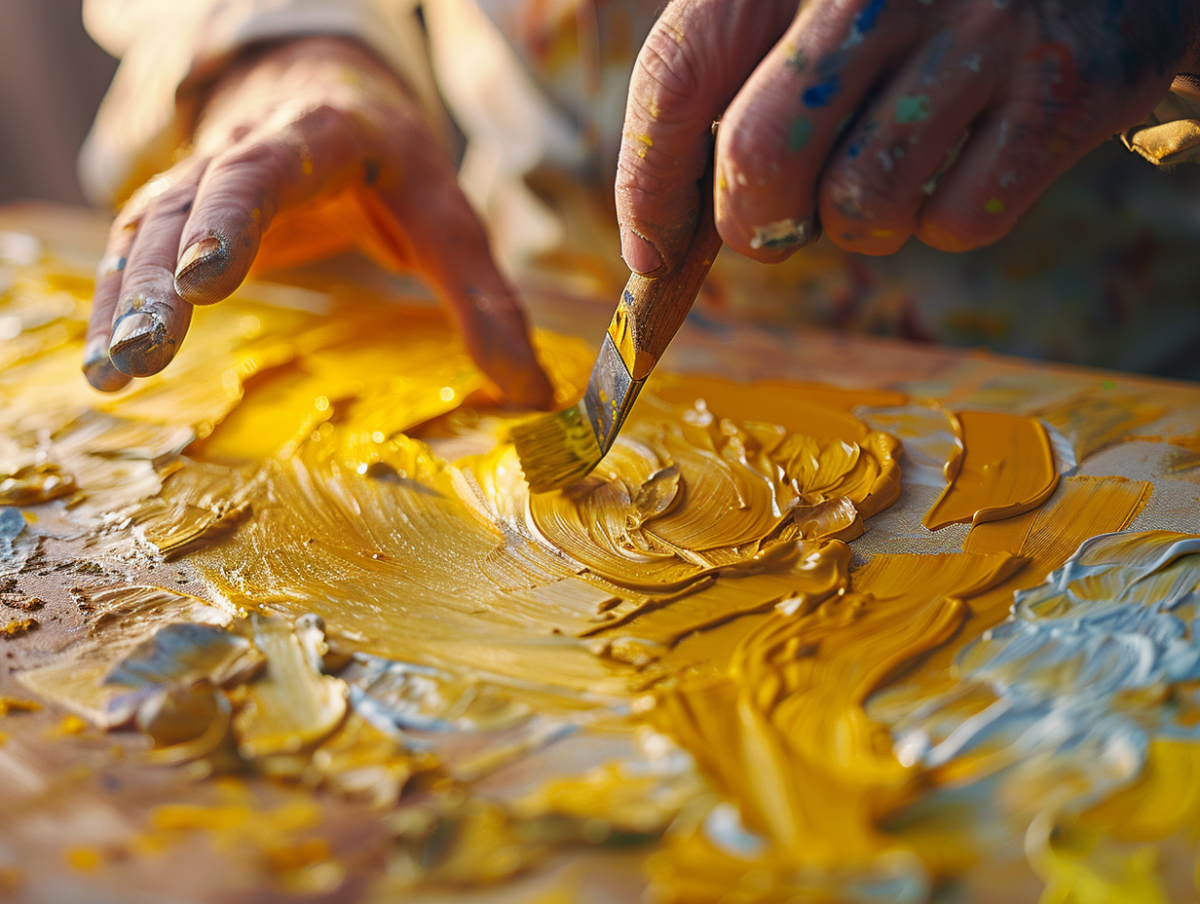
Obtaining yellow is not an end in itself, but the beginning of a creative process that demands precision and sensitivity. Yellow, a primary color, stands on its own, but the shades one wishes to achieve require specific mixing techniques. For a bright lemon yellow, mix primary yellow with a hint of white. This luminous shade, a symbol of freshness and vibrancy, is achieved through careful dosing, where the white should just touch the yellow without overpowering it.
Conversely, for a darker yellow, a shade that evokes the end of sunny days, one would add a measured amount of black to the primary yellow. This operation, far from trivial, requires a light hand and a keen eye to avoid slipping into a dull and lifeless color. The helpful tips for working with yellow in painting caution against excess and encourage experimentation.
As for how to make yellow a true light yellow or a gold yellow, the recipe becomes slightly more complex. Add a touch of red and white to the primary yellow to achieve these warm shades rich in depth. The glazing painting technique can also enrich the palette, layering thin and translucent coats for an unmatched subtlety. Experiment with these mixtures, as in art, proportions are measured not only in quantity but also in intuition and sensitivity.
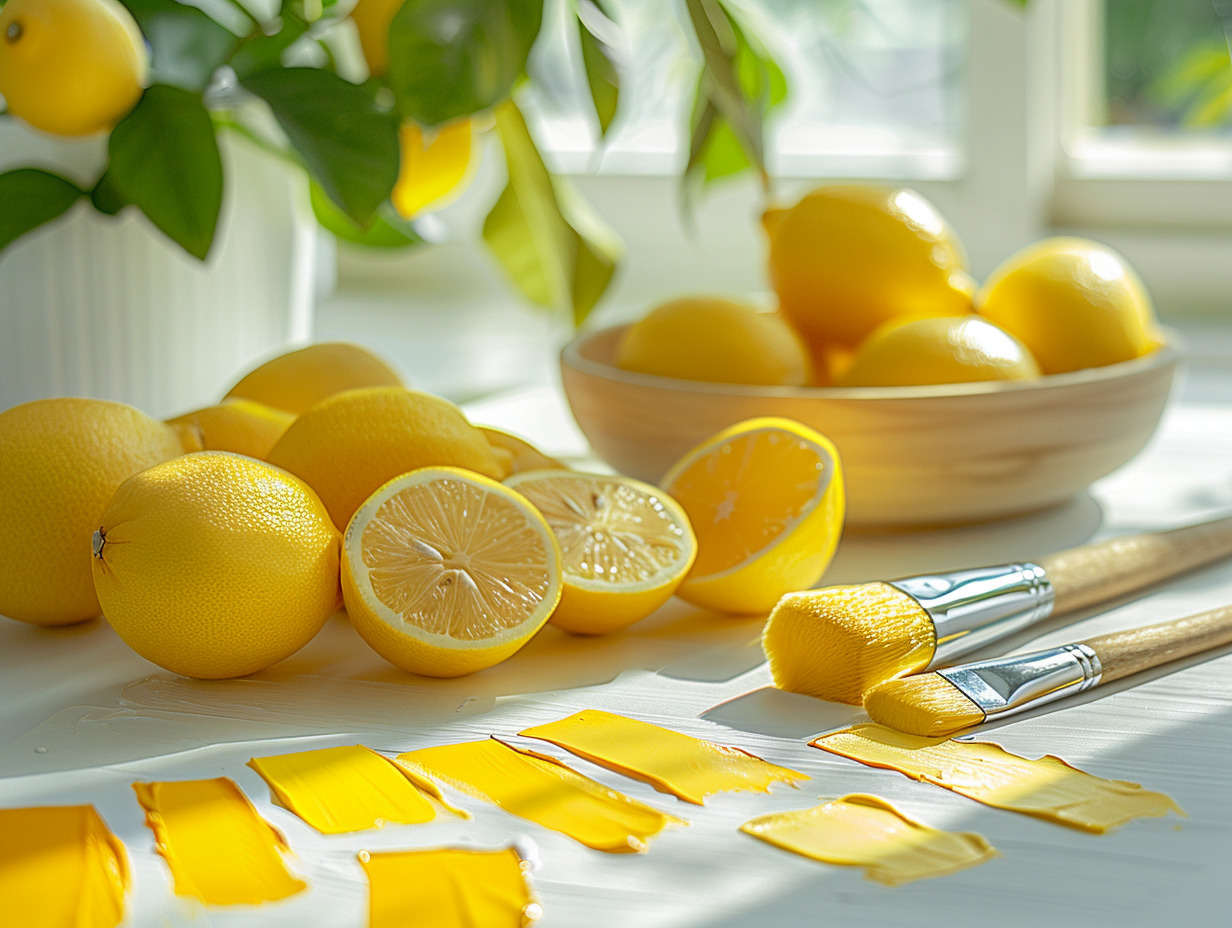
The shades of yellow: how to create and use them in your projects
The palette of yellows offers a surprising variety, from the palest to the most intense yellows. Lemon yellow, for example, is revealed by mixing primary yellow with white, while gold yellow, more vibrant, emerges from the union of primary yellow with red and white. These shades, distinctly different, fit into a meticulously crafted color wheel, where each hue finds its place and harmony.
To navigate between warm and cool colors, the yellow hue can provide a captivating visual bridge. A yellow leaning towards orange will warm a composition, while a yellow leaning towards green will bring a certain freshness. These subtleties, far from being anecdotal, give an additional dimension to the artist’s work, where the symbolism of yellow can vary across cultures, representing joy and optimism at times, and caution or transience at others.
In practice, the use of shades of yellow in your projects should be done with an awareness of their visual and emotional impact. Orange-yellow suggests warmth and dynamism, while red-yellow, often associated with gold, evokes luxury and prosperity. Mastering these shades allows one to direct the gaze and evoke the desired emotions, making yellow a powerful tool in the palette of any creator.